
 C-PTSD
Elena M.
C-PTSD, illustrator, tea enthusiast. Prefers bookstore dates and slow texting. Cats over clubs, always.
Lovery-mail is a dating community where PTSD is not a secret to manage around. Match with trauma-informed singles, veterans, and civilians who respect triggers, pacing, and the quiet work of healing — so love does not feel like another thing you have to explain.
Free forever tier · Trauma-aware moderation · Optional slow-match mode

Figures from our 2026 community report and independent U.S. trauma research focused on PTSD and dating.
Dating with PTSD is not the movie version. It is not a single dramatic flashback that ends with a cathartic hug. For most of us, it is quieter and more ordinary: the way your body tenses when a car backfires on the walk home from a first date, the nights you cannot sleep the way your partner can, the energy it takes to decide whether tonight is the night you tell them about the thing that shaped you.
Complex PTSD, post-assault PTSD, medical PTSD, service-connected PTSD, first-responder PTSD — they each carry different textures, but they share a common frustration on mainstream dating apps. You are asked to present a polished, unbothered version of yourself while also being told to “just be authentic.” Matches disappear when disclosure feels imminent. Others stay, but treat your PTSD like a personality quirk or, worse, a fixable project. A 2025 study in the Journal of Traumatic Stress found that trauma-informed partners correlated with a 2.4x increase in relationship satisfaction — not because they had special training, but because they had done the small work of learning how PTSD actually behaves.
You are not too much. You are recovering in public, on a planet that still has fireworks, sirens, and surprise touches. The right partner learns your weather — and brings an umbrella without making it a lecture.
On Lovery-mail, the PTSD community exists because a general dating app cannot hold these realities gracefully. Here, a slow reply is not a rejection. A need for the booth seat facing the door is not quirky. A hard boundary on certain topics is not a red flag — it is a normal, respected feature of a person who knows themselves. You still get to be funny, flirty, and hopeful. You just get to be those things without editing out the rest.
Not a therapist, not a rescuer — just a partner who has done small, specific homework. These are the behaviors our community consistently names as green flags.
A trauma-informed partner asks “how do you want me to respond when this happens?” instead of guessing. Curiosity beats assumption every single time.
Second date in two weeks, not two days. Physical intimacy when you say so, not when they hope so. Pace is the single most revealing green flag.
If a trigger happens on a date, they get grounded, not defensive. Your nervous system response is not a comment on how much they are liked.
A hard no on fireworks night, crowded bars, or certain topics is accepted as information, not negotiated as punishment.
They have heard of 5-4-3-2-1, box breathing, or cold-water resets — and they know when to offer and when to simply sit nearby.
Support is a partner role. Treatment is a clinician’s role. Trauma-informed partners know the line and respect it.
Deeper frameworks in our guide to partner expectations.
Dating a veteran with PTSD is not a specialty; it is a relationship where a specific context matters. Service shapes a nervous system. Deployments, loss, moral injury, and the sharp contrast between military structure and civilian chaos all leave marks that do not show on a first date.
According to the U.S. Department of Veterans Affairs (2025), roughly 7% of veterans will have PTSD in their lifetime, with higher rates for combat-deployed service members. Translation: veteran dating with PTSD is not a niche — it is a population. On Lovery-mail, you can filter for veterans and for partners who specifically want to date veterans, civilians included, without the performative flag-waving or the opposite reflex that treats military service as a warning label.
If you are a partner of a veteran with PTSD, our communication guide has specific scripts for navigating flashbacks, grounding, and disclosure timing.
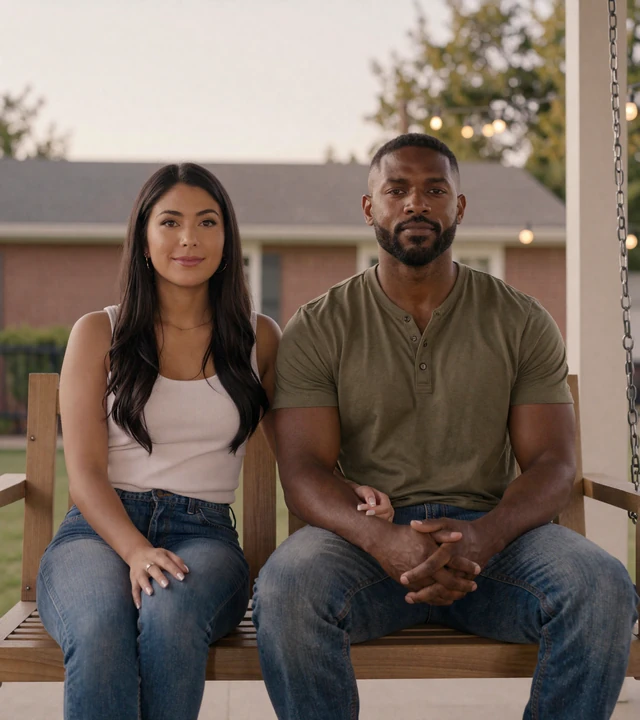
A trigger is not a preference. It is a nervous-system response that bypasses the thinking brain and delivers a full-body alarm. Boundaries are the practical tools that keep triggers rare, manageable, or at least predictable. On a first date, this can sound clinical — but in practice it is just grown-up communication with better labels.
Disclosure is personal. Some community members put PTSD on their profile bio. Others disclose by date three. Others wait until a relationship is moving past casual. None of these is wrong. What matters is whether the timing feels like yours — not a response to pressure from the platform or the person.
A simple trigger and boundary script
Try this phrasing the first time it matters: “Heads up — crowded places after dark are a no for me right now. It is a PTSD thing, not a you thing. A daytime walk or a quiet cafe would be great instead.” Short, informative, boundary first, alternative offered. A trauma-informed partner will receive this as ordinary information. Anyone who treats it as drama is giving you useful data about fit.
Our online dating safety guide covers what to do if a match pushes for disclosure before you are ready.
A snapshot of PTSD community members you might meet this month on Lovery-mail. Shared with written consent; surnames redacted.
C-PTSD
C-PTSD, illustrator, tea enthusiast. Prefers bookstore dates and slow texting. Cats over clubs, always.
 Veteran · PTSD
Army veteran, service-connected PTSD, woodworker. Looking for daytime adventures and quiet evenings with someone patient.
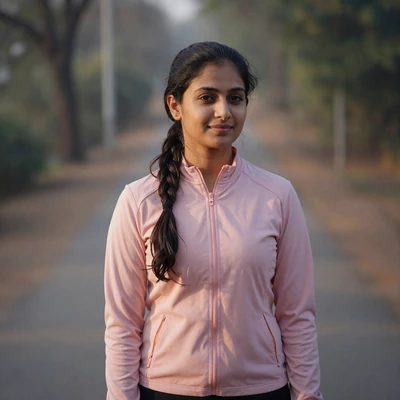 PTSD · Anxiety
PTSD and anxiety, ER nurse off the clock, marathon runner. Early-morning coffee dates or long trail walks.
PTSD members often overlap with neighboring communities on Lovery-mail. You can belong to more than one — most of us do.

Dating with bipolar disorder, disclosure timing, and supportive matches who understand episodes and mood management as part of a whole person.

Sensory-friendly date ideas, masking-optional matches, and a community where overlap with PTSD and anxiety is welcomed, not dismissed.
Read real PTSD and interabled love stories from our community →
Real questions from community members and their partners, answered by our trauma-informed moderation team.
Lovery-mail is an inclusive dating platform with a dedicated PTSD and trauma-informed community. You can filter for PTSD, complex PTSD, veteran status, and trauma-informed matches during signup, and our UX is designed to avoid the rapid-fire pressure that triggers many PTSD daters on mainstream apps. Signup is free and does not require any clinical documentation.
On your terms. Many members use a profile-level tag so matches self-select in. Others disclose in chat after a few messages, or on date three when connection is building. What matters is that the timing feels like yours, not a response to pressure. A trauma-informed partner will accept disclosure as ordinary information, not a dramatic reveal.
It involves learning the context, respecting pace, and letting therapy stay with the therapist. Practical details include sleep hygiene around night terrors, awareness of holidays and anniversaries that matter, patience with crowded or loud environments, and understanding VA appointments or service dogs. It does not require you to become a caregiver or a clinician.
Yes. Dating with anxiety and panic disorder sits naturally inside our PTSD and trauma-informed community, and many members identify with all three. You can select multiple tags during signup to match with people who share overlapping experiences.
Three ways. Our profile guidelines prohibit language that treats trauma, disability, or veteran status as a kink or a rescue project. Our moderation team actively reviews flagged profiles, and our report tool lets you flag interactions that feel extractive. Members who violate these rules lose access permanently.
Yes. Our core features — profile creation, messaging, matching, PTSD and trauma-informed filters, safety tools, and community resources — are free forever. Optional premium add-ons exist but are never required to find a match. No credit card is requested at signup.