
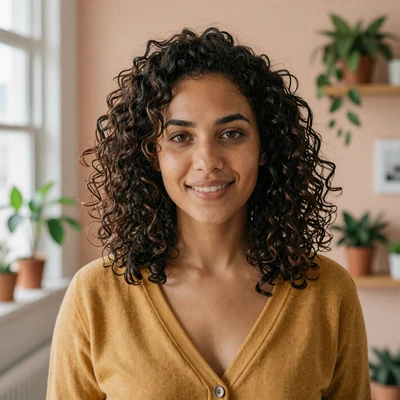
 Epilepsy
Naomi T.
Focal epilepsy, medication controlled. Librarian, slow-coffee person, loves rainy walks. Looking for calm, curious, early-to-bed energy.
Lovery-mail is a chronic illness dating app where seizures are not a conversation killer. Match with partners who already understand triggers, aftercare, and the small logistics of living with epilepsy — so your first few dates can be about you, not your diagnosis.
No flashing animations · Calm UI · Reduced-motion friendly
Dating with epilepsy is 95 percent ordinary and 5 percent very specific logistics. Most of your dating life looks like everyone else’s: the awkward first coffee, the overthought second text, the walk that turns into a three-hour conversation. The other 5 percent is the stuff mainstream apps do not have space for — telling a new match that you do not drive right now, deciding whether to mention your rescue medication before the Saturday concert, or explaining why you are going home at 10 p.m. because sleep is not optional for your brain.
According to the CDC, roughly 3.4 million U.S. adults live with active epilepsy, and community surveys by the Epilepsy Foundation consistently find that disclosure anxiety is one of the top barriers to dating. That is not because epilepsy is shameful. It is because mainstream platforms make it exhausting to keep re-explaining a chronic condition to people who already read “seizure” as “emergency.” You become your diagnosis before you become a person.
Epilepsy is not your personality. It is one paragraph of a much longer story — and you deserve a match who reads to the end.
Lovery-mail is built around that reframe. When you join our disabled dating site, epilepsy is one optional tag among many. You decide when and how it shows up. You can filter for matches who live with seizures too, for neurodivergent or chronically ill partners who simply get the rhythm of flare-and-rest, or for neurotypical folks who have explicitly said they want to learn. Either way, nobody swipes past you because the word “epilepsy” was in your first sentence.
A partner who knows what to do during a seizure is one of the most underrated forms of intimacy for people with epilepsy. It is not about having a medical expert at your side. It is about knowing that if your body does its thing at 2 a.m., the person next to you will stay calm, time the seizure, and protect your head instead of panicking.
Basic seizure first aid any partner can learn in five minutes
Stay, time, protect. Stay with your partner, time the seizure on a phone, and ease them to the floor if they are standing. Cushion the head with something soft. Loosen anything tight around the neck. Turn them gently onto their side once movements slow so the airway stays clear. Do not put anything in the mouth, do not restrain limbs, and do not offer water until they are fully alert.
Call 911 when: the seizure lasts longer than five minutes, a second seizure follows quickly, breathing does not return to normal, the person is injured, or it is their first-ever seizure. Most seizures end on their own in under two minutes and do not need an emergency room.
More guidance lives on the Safety & Privacy page and in the accessibility in dating guide.
On Lovery-mail, profile prompts gently let members share the information they want a partner to have: seizure type, typical warning signs, what helps during recovery, and whether they carry rescue medication. You decide what is visible before a match and what you only share once trust is built.
Our product team worked with photosensitive members to make Lovery-mail visually safe by default. There are no autoplaying videos, no rapid animated ads, no strobing notifications, and a built-in reduced-motion mode that respects your system setting. Profile photos are gently overlaid rather than flashed through. For a platform that wants to be a chronic illness dating app, these are not nice-to-haves — they are the point.
There is no single right moment to tell a match that you have epilepsy. There is only a moment that feels right to you. Some members put it in their profile bio as a normalizing one-liner. Others prefer a calm mid-conversation mention on the second or third date, once there is enough trust that the news lands as information, not a warning label.
For deeper scripts and partner conversations around chronic conditions, the communication in relationships guide has sample dialogues you can borrow or adapt.
Epilepsy does best in a life with steady rhythms. The good news is that most of those rhythms make for a pretty great relationship too.
Sleep debt, alcohol, dehydration, skipped meals, flashing lights, high stress. A partner who plans around your triggers is not babysitting — they are just paying attention.
Anti-seizure medication works only when it is taken on schedule. A shared reminder, a bedside dose, or a “did you take yours” text becomes a tiny act of love, not surveillance.
Seven to nine hours is medicine for an epileptic brain. Partners who honor your early bedtime and keep the bedroom dark are contributing to your seizure control in a real, measurable way.
Chronic stress raises seizure risk. Building calm into the week — slow mornings, walks, body doubling on admin — is something couples can do together, not a solo project.
Many people with epilepsy cannot drive. Matches who see rideshare, transit, or being the designated driver as normal — not a hassle — make dating infinitely easier.
A shared note with neurologist contact, medication list, rescue med instructions, and your postictal preferences. Boring to write, priceless if it is ever needed.
A snapshot of Lovery-mail members living with epilepsy. Shared with written consent; surnames redacted.
Epilepsy
Focal epilepsy, medication controlled. Librarian, slow-coffee person, loves rainy walks. Looking for calm, curious, early-to-bed energy.
 Epilepsy
Tonic-clonic epilepsy, VNS implant. Woodworker, dog dad, big Sunday cook. Non-driver — let us plan nearby.
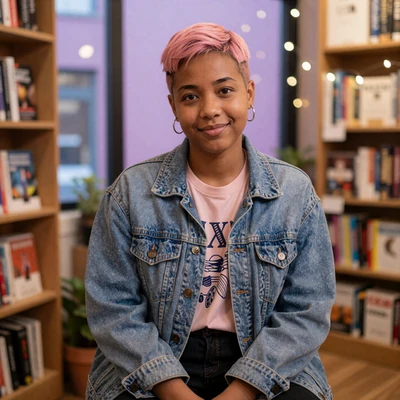 Photosensitive
Photosensitive epilepsy, grad student in public health. Daylight dates please, no concerts with light shows. Museums are my love language.
Members with epilepsy often find kinship with these neighboring communities. You can belong to more than one — most of us do.

Dating with bipolar disorder, disclosure timing, and supportive matches who understand episodes, medication, and recovery as part of a whole person.

Trauma-informed partners, triggers, and boundaries. A community where hyperarousal and healing are met with patience, not fixing.
Read our guide to partner expectations in chronic illness relationships →
Real questions from the Lovery-mail epilepsy community, answered by our moderation team and medical advisors.
Lovery-mail is a chronic illness dating app and disabled dating site with a dedicated epilepsy community. Members can tag their seizure type, share partner-facing aftercare notes, and filter for matches who have said they understand chronic conditions. Our interface is flash-free, low-motion, and safe to browse for photosensitive members. Signup is free.
Whenever it feels right to you. Some members disclose in their profile bio to filter early. Others wait until the second or third date, when there is enough trust that the news lands as information rather than a warning. There is no single correct timeline — only the one you choose.
No. Lovery-mail has explicit anti-fetishization policies in its community guidelines, proactive moderation, and an easy one-tap report tool. Accounts that treat epilepsy or any disability as a fetish are removed. Read the details on our Safety & Privacy page.
Yes. During profile setup you can indicate interest in matching with members who share epilepsy, broader chronic illness, neurodivergence, or simply people who have flagged themselves as allies willing to learn. Filters are optional and reversible at any time.
No. Lovery-mail is built flash-free by default: no strobing animations, no autoplay videos, and a reduced-motion mode that respects your device setting. This is a deliberate product decision for our photosensitive members, not a toggle you have to find.
Yes. Core features including profile, messaging, matching, safety tools, and the epilepsy community filters are free forever. Optional premium add-ons exist but are never required to find a match, and no credit card is requested at signup.