
The short version
- Lead with who you are, not what you have. Disability belongs in a bio, but not as the first or only thing.
- Language is a filter. The words you use signal who will thrive with you — and who will not.
- Pace disclosure like consent. You owe honesty, not exposure.
- Red flags show up early. Pity, savior talk, and fetishization are not compliments.
- Accessibility is a shared project. The right partner builds it with you.
Most advice about dating with a disability still treats it like a problem to solve. We read articles that frame our love lives as brave, inspiring, or tragically underserved — and then recommend we “just be confident.” That is not advice. That is a shrug.
This guide is different because it was written by and with people who date from inside the experience: wheelchair users, autistic adults, Deaf singles, amputees, chronically ill folks, veterans with PTSD, little people, and more. Below are the principles we come back to, the language that holds up, and the early signals that save time, energy, and heartbreak.
Core principles of inclusive dating
Inclusive dating is a practice, not a mood. The three principles below are the scaffolding every healthy interabled or shared-disability relationship we have seen rests on. They matter whether you are the disabled partner, the non-disabled partner, or two disabled partners figuring out who handles what.
Respect over rescue
Your story is not a sob story, and a partner is not a caregiver by default. Healthy matches read you as a peer, not a project.
Curiosity without entitlement
Questions about your body, meds, or devices are fine if the person has earned the question. They are never owed.
Access as a shared language
Good partners learn your access needs the way they learn your favorite food — with attention, not effort performed at you.
Hold these lightly as filters. If someone violates the first two in a single conversation, you do not need to fix them. You need to close the chat.
The language that makes or breaks a connection
Language is the cheapest, fastest signal of whether someone has done their homework. It is not about perfection — accents, autocorrect, and aunts exist — it is about intent and correction. Here is what our community consistently reads as green or red.
Words that open a door
- “What works for you?” — hands the mic over without guessing.
- “Tell me what helps, not what is wrong.” — asks for access, not medical history.
- “I want to learn, not be a hero.” — self-aware, low-pressure.
- “Wheelchair user,” “autistic,” “Deaf,” “amputee,” “chronically ill.” — plain identity-first or person-first language the community actually uses.
Words that quietly slam one
- “Differently abled” or “special needs.” Euphemisms that erase the word we chose for ourselves.
- “Wheelchair-bound” or “suffers from.” A chair is freedom. Suffering is context, not a label.
- “You don’t look disabled.” A backhanded compliment that tells us what your bar was.
- “I don’t see your disability — I just see you.” We want both. Loving us means seeing all of us.
The best partners are not the ones who know every term. They are the ones who listen the first time, apologize without drama, and update their vocabulary like they update their music taste — gladly.
Building safe, genuine connections from message one
Safe is not the same as cautious. Safe means that every stage of contact — matching, chatting, a first video call, a first meet — has a pace you chose. Here is the flow many members of Lovery-mail land on, adapted to your own energy and needs.
- Write a bio that sorts you. Include two things you love, one thing you are working on, and your identity or access note in the tone you want used with you. That alone filters out half the bad matches.
- Open with something specific. A detail from their bio beats “hey” every time and tells them you are not shotgunning messages.
- Move to voice or video before meeting. Ten minutes on a call catches things photos never will: tone, curiosity, rhythm.
- Pace disclosure on your timeline. Share medical or trauma detail when you want to, not when someone prods. “I will share more as we go” is a complete sentence.
- Plan the first date around your real access. Step-free venue, quiet room, short duration, a check-in text afterward. The right person thinks this is thoughtful, not high-maintenance.
- Debrief honestly with yourself. Did they read you as a full person? Did you enjoy being you with them? That answer matters more than chemistry.
Red flags to spot early
If any of these show up inside the first few exchanges, believe them the first time:
- Savior language. “I’ve always wanted to help someone like you” is not love. It is a role.
- Fetish questions disguised as curiosity. Hyper-focus on your prosthetic, stump, stims, or diagnosis before asking about your work or friends.
- Pity framing. “You’re so brave for being on here” reframes you as inspiration porn, not a date.
- Pressure to disclose fast. Anyone demanding your full medical history in chat is not ready to know it.
- Erasure. “Let’s not talk about that” when you mention access needs. It never gets easier, only louder.
Our red flags on dating apps guide covers how to document and report these patterns when you see them.
Real examples of inclusive dating in practice
Principles are easier to remember when you can see them in motion. Two short sketches from the Lovery-mail community, shared with permission and names changed.
Rosa, 31, chronically ill, Miami
Rosa used to lead with an apology: “Sorry if I flake, I have lupus.” It set every date up as a favor she was receiving. On Lovery-mail, she rewrote her bio: “I live with lupus, which means I plan for energy the way other people plan for money. I love Cuban coffee, 1970s sci-fi, and slow Sundays.” The matches changed overnight. She now dates a man who asks, “What kind of Sunday is it?” before suggesting plans — no apology required on either side.
Nate and Wren, 27, autistic & ADHD, Seattle
Nate (autistic) and Wren (ADHD) matched on a shared love of maps. Their first three dates were a bookstore, a quiet tea shop, and a long walk — all picked to keep sensory load low and conversation high. They wrote each other a one-page “user manual” at month three: how they handle conflict, what recovery looks like after a hard day, what a good apology sounds like. A year in, they still reread it. The communication in relationships guide has templates if you want to try the same.
The quiet promise of inclusive dating
There is a version of dating with a disability where the best outcome is “someone who is okay with it.” We do not work from that script. The promise here is bigger: a partner who is delighted by the whole shape of your life, access needs included, because those needs are just another form of how you love and are loved.
Finding love with a disability is not a rare event. It happens every week in our community because we built the conditions for it — identity-first filters, anti-fetishization moderation, accessibility at the core. Your job is not to earn the relationship you deserve. Your job is to show up, honestly, in a room full of people who are doing the same.
Keep reading on Lovery-mail
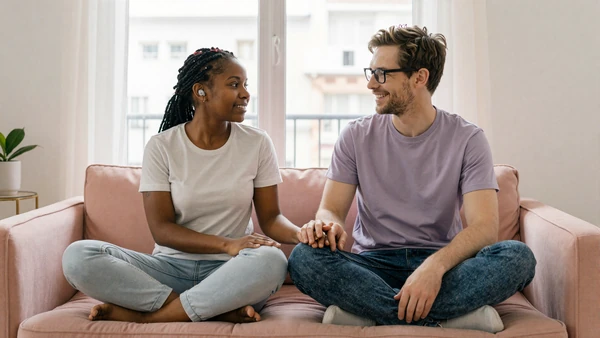
Communication in Relationships
Active listening, conflict styles, and adaptive communication activities for Deaf, autistic, and long-distance couples.
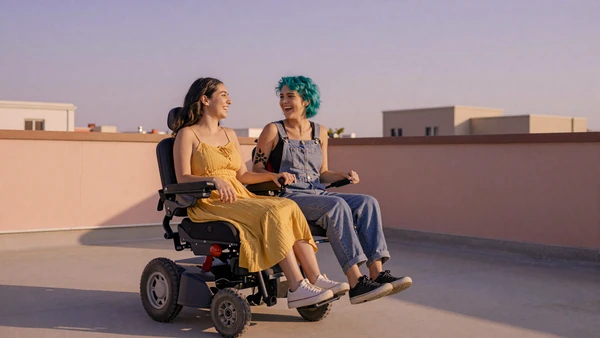
Disability Dating Myths, Debunked
Ten myths about disability and relationships, checked against research, lived experience, and our own community voices.
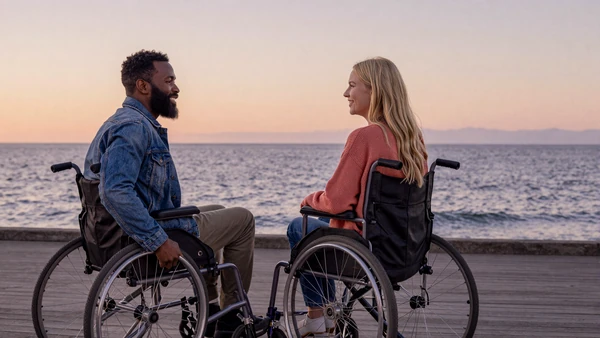
Wheelchair Dating Site
Meet wheelchair users who date on their own terms. Access tips, first-date planning, and profiles built around your lifestyle.